Published by:
CGP EDU Academic Team
Published on: September 12, 2026
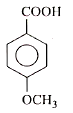
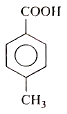
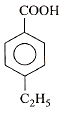
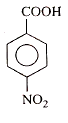
Which of the following substituted benzoic acid is the weakest acid?
Text Solution
Verified by ExpertsThe correct answer is:
C
To determine which substituted benzoic acid is the weakest acid, we need to analyze the effects of the substituents on the acidity of benzoic acid. Benzoic acid (C6H5COOH) is an acid due to the presence of the carboxylic acid functional group (–COOH).
1. **Substituents Analysis**:\
- **Option A** (–OCH3 or methoxy group): This is an electron-donating group, which can decrease the acidity of the benzoic acid by destabilizing the carboxylate ion formed after deprotonation.\
- **Option B** (–CH3 or methyl group): This is also an electron-donating group, which also decreases acidity but is slightly less impactful than the methoxy group.\
- **Option C** (–C2H5 or ethyl group): This is another electron-donating group, which decreases acidity. However, it is larger and can exhibit a weaker effect than –CH3 and –OCH3.\
- **Option D** (–NO2 or nitro group): This is an electron-withdrawing group that stabilizes the carboxylate ion, significantly increasing acidity.\
2. **Conclusion**: The weaker the acid, the less stabilized the carboxylate ion is after deprotonation. Among the options, option C (–C2H5) is the weakest acid due to lower electron-donating effects compared to the other substituents that are more effective at destabilizing the carboxylate ion. Therefore, the weakest acid among these is C.
1. **Substituents Analysis**:\
- **Option A** (–OCH3 or methoxy group): This is an electron-donating group, which can decrease the acidity of the benzoic acid by destabilizing the carboxylate ion formed after deprotonation.\
- **Option B** (–CH3 or methyl group): This is also an electron-donating group, which also decreases acidity but is slightly less impactful than the methoxy group.\
- **Option C** (–C2H5 or ethyl group): This is another electron-donating group, which decreases acidity. However, it is larger and can exhibit a weaker effect than –CH3 and –OCH3.\
- **Option D** (–NO2 or nitro group): This is an electron-withdrawing group that stabilizes the carboxylate ion, significantly increasing acidity.\
2. **Conclusion**: The weaker the acid, the less stabilized the carboxylate ion is after deprotonation. Among the options, option C (–C2H5) is the weakest acid due to lower electron-donating effects compared to the other substituents that are more effective at destabilizing the carboxylate ion. Therefore, the weakest acid among these is C.
Prepare Smarter with CGP Edu
Get practice questions, solutions, and test series in one place.
Write a Review
Share your experience with this question and solution.
Commentary
Send your comment, doubt, correction, or feedback to admin.
Similar Questions
Explore conceptually related problems
Physics
Choose the correct option from the following options given below:
In Young's double slit experiment, the fringe width is . If the entire arrangement is placed in wa…
Match List I with List II.
List IList IIA.TorqueI.B.StressII.C.Latent HeatIII.D.PowerIV.
Choose the…
The mass of proton, neutron and helium nucleus are respectively and . The binding energy of heliu…
The magnitude of torque on a particle of mass is 2.5 about the origin. If the force acting on it …
In the given circuit, rms value of current through the resistor is :